


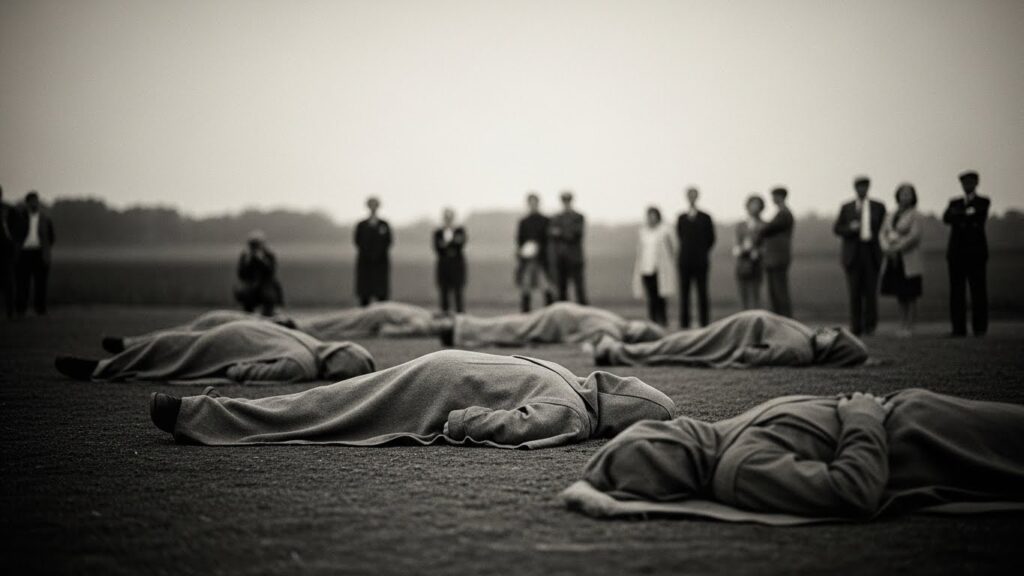
History doesn’t always shout. Sometimes it whispers warnings that grow louder with time. The Kishinev pogrom was one of those moments—a violent eruption that shocked the world and forever altered Jewish history. It wasn’t the first pogrom, but it became one of the most symbolically powerful, like a crack in a wall that revealed how fragile safety had become.
To understand the Kishinev pogrom is to understand fear, injustice, and the moment when hope began turning into determination.
Introduction to the Kishinev Pogrom
The Kishinev pogrom refers to a wave of anti-Jewish violence that took place in 1903 in the city of Kishinev (modern-day Chișinău, Moldova). News of the brutality spread rapidly, provoking outrage far beyond the borders of the Russian Empire.
This wasn’t just local violence—it became a global wake-up call.
Where and When the Kishinev Pogrom Occurred
Kishinev in the Russian Empire
At the time, Kishinev was part of the Russian Empire’s Bessarabia region. It was a multiethnic city with a large Jewish population living under restrictive laws and widespread discrimination.
Jews could live there—but rarely felt safe there.
What Is a Pogrom?
Definition and Historical Context
A pogrom is a violent riot aimed at the persecution of a specific ethnic or religious group, particularly Jews in Eastern Europe. Pogroms often involved destruction of property, assault, and murder—frequently with the indifference or complicity of authorities.
It’s violence fueled by permission—spoken or silent.
Background Conditions Leading to the Kishinev Pogrom
Political Climate in Tsarist Russia
The Russian Empire at the turn of the 20th century was unstable. Economic hardship, political repression, and social unrest created fertile ground for scapegoating.
When pressure rises, minorities often become targets.
Antisemitism and Social Tensions
Jews faced legal discrimination, economic restrictions, and social hostility. Antisemitic stereotypes were widespread and reinforced by newspapers, clergy, and officials.
Hate didn’t appear overnight—it was cultivated.
The Immediate Triggers of the Pogrom
Blood Libel Accusations
The spark that ignited the Kishinev pogrom was a false accusation that Jews had murdered a Christian child for ritual purposes—a classic blood libel. Despite being untrue, the accusation was repeated and amplified by local antisemitic press.
A lie, repeated enough, became a weapon.
Events of the Kishinev Pogrom
Violence, Destruction, and Chaos
Over two days during Easter in April 1903, mobs attacked Jewish homes, shops, and synagogues. People were beaten, robbed, and killed. Families hid in terror as violence spread through the streets.
Order vanished. Fear took over.
Role of Authorities and Law Enforcement
Perhaps most shocking was the response—or lack of response—from authorities. Police and officials largely stood aside, intervening only after significant damage had been done.
Silence, in this case, was a form of permission.
Casualties and Damage
Human and Material Losses
Dozens of Jews were killed, hundreds injured, and thousands left homeless. Entire neighborhoods were devastated, and livelihoods destroyed.
Numbers tell part of the story. Trauma tells the rest.
Media Coverage and Global Reaction
International Outrage
News of the Kishinev pogrom reached Western Europe and the United States, triggering outrage. Newspapers condemned the violence, protests were held, and petitions sent to the Russian government.
The world was watching—and horrified.
Jewish Community Response
Self-Defense and Organization
The pogrom sparked a shift in mindset. Many Jewish communities began organizing self-defense groups, rejecting the idea that passivity ensured survival.
Fear gave way to resolve.
Impact on Zionism and Jewish Migration
The Kishinev pogrom strengthened Zionist movements and accelerated Jewish emigration. For many, it confirmed that safety in Eastern Europe was an illusion.
The idea of a homeland no longer felt abstract—it felt necessary.
Literary and Cultural Responses
Poetry, Journalism, and Memory
Writers and poets responded with powerful works that mourned the dead and condemned the violence. These cultural responses ensured the pogrom would not fade into silence.
Memory became resistance.
Long-Term Consequences of the Kishinev Pogrom
The pogrom influenced political activism, migration patterns, and Jewish self-perception. It also exposed the dangers of unchecked hatred and state indifference.
History changed course that spring.
Historical Debates and Interpretations
Historians continue to debate the extent of government involvement and responsibility. While direct orders may not have been given, tolerance of violence speaks loudly.
What leaders allow often matters as much as what they command.
Why the Kishinev Pogrom Still Matters Today
The Kishinev pogrom remains relevant as a reminder of how misinformation, hatred, and institutional failure can combine into catastrophe. It warns against complacency and the normalization of prejudice.
History doesn’t repeat—but it rhymes.
Conclusion
The Kishinev pogrom stands as a painful milestone in Jewish history—a moment when violence shattered illusions of safety and forced a reckoning with reality. Its legacy lives on in memory, migration, and movements born from tragedy. Remembering Kishinev isn’t about dwelling in the past; it’s about recognizing the warning signs of hatred and ensuring they are never ignored again.
FAQs – Kishinev Pogrom
1. What was the Kishinev pogrom?
It was a violent anti-Jewish riot in 1903 in Kishinev, part of the Russian Empire.
2. What caused the Kishinev pogrom?
It was triggered by false blood libel accusations and fueled by antisemitism and official inaction.
3. How did the world react to the pogrom?
There was widespread international outrage, protests, and condemnation.
4. Why is the Kishinev pogrom historically important?
It marked a turning point in Jewish political consciousness and migration.
5. Does the Kishinev pogrom still matter today?
Yes. It serves as a warning about the consequences of hate, misinformation, and silence.