

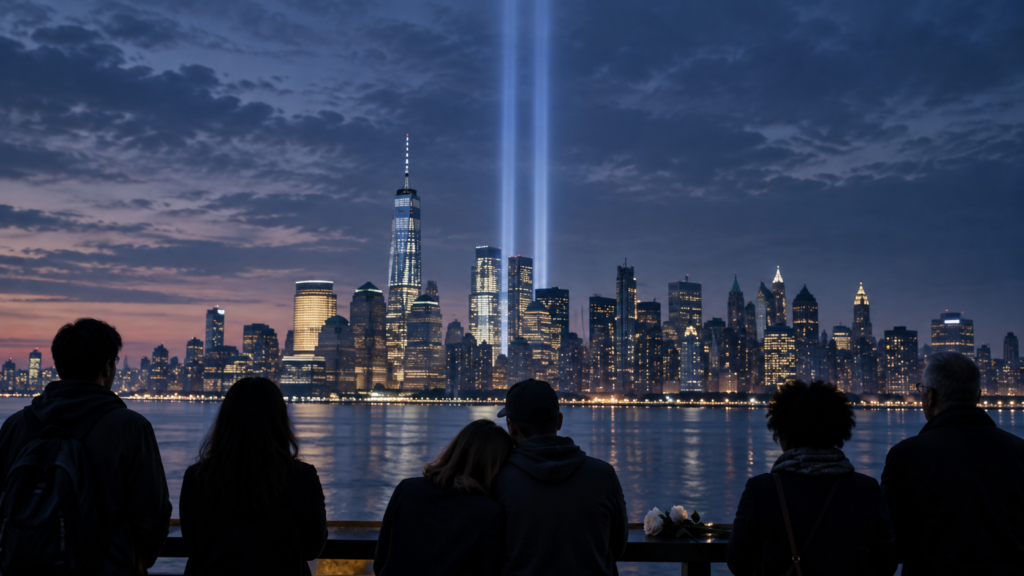
Twenty-five years on, September 11 still isn’t just a date on the calendar. Every year, the anniversary brings a familiar mix of tributes, news retrospectives, and a quieter, more private kind of unease that shows up even in people who weren’t anywhere near Lower Manhattan that morning.
Psychologists have a name for that: collective trauma. Researchers describe it as a society-wide psychological reaction to an event, one that isn’t just a historical fact but something a group carries in its shared memory and keeps reconstructing over time as it tries to make sense of what happened.
Why the effects reach beyond those who were there
One of the stranger findings in trauma research is how far collective trauma travels. Studies on large-scale disasters have found that people who weren’t present for the event, and had little direct exposure to it, can still show symptom patterns similar to those who lived through it firsthand, a kind of psychological spillover sometimes called stress contagion.
With 9/11 specifically, researchers have pointed to the symbolic weight of the attacks as part of the reason. The event didn’t just cause physical damage. It undercut basic assumptions many Americans held about their own safety and the stability of everyday life. That combination, real danger plus a shaken sense of security, helps explain why the trauma spread well past the people directly affected.
The anniversary effect
There’s also a well-documented phenomenon called the anniversary effect, in which the approach of a traumatic event’s anniversary triggers a spike in anxiety, sadness, or distress, even years or decades later. Experts attribute it to a mix of factors: how traumatic memory gets stored in the body, and the media coverage and public conversation that resurface every year around the date itself.
That second piece matters more than people often realize. The 9/11 anniversary isn’t a private one. It’s rebroadcast, discussed, and memorialized publicly every year, which means the emotional cues that can trigger a reaction are built into the calendar itself, not something survivors have to stumble across on their own.
A story still being processed
Twenty-five years is long enough that some of the rawest immediate aftermath has faded into history for younger generations, but not long enough for the country to have fully processed what happened. Mental health professionals who work with trauma survivors, including first responders, continue to see the anniversary surface grief, anger, and anxiety that had otherwise gone quiet for most of the year.
That persistence is part of why clinicians increasingly treat anniversary reactions as a distinct concern rather than a footnote to a general PTSD diagnosis. Recognizing the pattern, instead of writing it off as an isolated bad week, tends to be the first step toward managing it: some people find it helps to plan for the date ahead of time, line up extra support, or simply expect the wave rather than being blindsided by it every year.
A New York-based trauma expert, psychiatrist, psychoanalyst, and 9/11 first responder, Dr. Nina Cerfolio, has made a similar point in her own writing on the subject: that healing from an event like 9/11 isn’t linear, and that self-reflection, rather than avoidance, is usually what allows grief to loosen its grip when it resurfaces year after year.
That’s ultimately what separates collective trauma from a static historical wound. As the research suggests, remembering isn’t just about looking backward. It’s part of how a society, and the people within it, keep working through an event that never fully resolves, one anniversary at a time.