

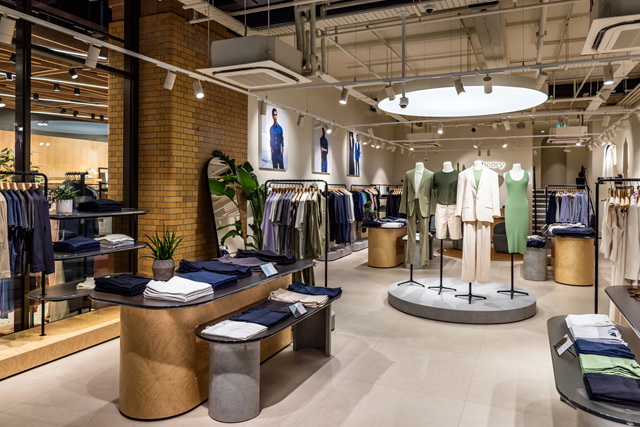
The success of a retail space hinges on its functionality and atmosphere, but in a high-traffic shopping mall, durability becomes the non-negotiable foundation. Tens of thousands of shoppers pass through these environments weekly, subjecting every display, shelving unit, and fitting room fixture to relentless wear. Selecting durable commercial fixtures for high-traffic environments is less a purchasing decision and more a long-term strategic investment.
Failure to do so leads to a cycle of constant repair and replacement, draining operational budgets and creating a shabby, unprofessional appearance that drives customers away. Conversely, the right fixtures project stability, quality, and brand confidence. This article outlines the critical considerations—from material science to traffic flow analysis—that separate a fixture that merely looks good from one that will perform reliably for years under extreme conditions. We will move beyond aesthetics to examine the core principles of resilience, safety, and functional design tailored for the mall context.
The High-Stakes Environment of Shopping Mall Retail
Shopping malls represent a unique and punishing environment for retail furniture. Unlike a standalone boutique, mall-based stores experience a relentless, high-volume flow of customers from opening until closing, seven days a week. This traffic is not just about numbers; it’s about behavior. Shoppers are often distracted, carrying bags and drinks, and may lean, bump, or apply unintended stress to displays.
The fixtures must withstand more than casual contact. They endure the constant weight of merchandise, the pressure of shoppers searching through sizes, the impact of strollers and carts, and the chemical exposure from cosmetics, perfumes, and cleaning agents. Furthermore, mall lighting, often heavy in UV from skylights, can cause inferior materials to fade, crack, or become brittle over time. This environment demands a paradigm shift from standard retail procurement. The primary goal shifts from initial cost to total cost of ownership, factoring in lifespan, maintenance, and the hidden cost of downtime for repairs.
Core Material Considerations for Maximum Durability
The foundation of any durable fixture is its material composition. In high-traffic malls, the standard options often fall short. Here, we evaluate the most resilient choices.
Metals: The Heavy-Duty Contenders
Powder-coated steel and aluminum alloys are top performers. Powder coating, a dry finishing process, creates a thicker, more uniform, and more chip-resistant surface than traditional paint. It is highly resistant to scratches, chemicals, and fading. For structural components like frame bases, uprights, and shelving brackets, high-gauge steel provides the necessary strength. Aluminum, while lighter, offers excellent strength-to-weight ratios and inherent corrosion resistance, making it ideal for fixtures that need to be frequently reconfigured. Look for welded seams over mechanical fasteners for added longevity.
High-Pressure Laminates and Thermofused Melamine
For shelving, countertops, and casework, engineered wood products surfaced with high-pressure laminate (HPL) or thermofused melamine (TFM) are superior to solid wood or particleboard. These surfaces are exceptionally hard, scratch-resistant, and easy to clean. HPL, in particular, offers a vast range of designs and is highly resistant to impact, moisture, and stains. The key is ensuring the substrate—the core material—is also of high density to prevent sagging under weight and to provide a stable base for the durable surface layer. This is critical for maintaining the integrity of Store Fixtures that bear constant product loads.
Commercial-Grade Polymers and Acrylics
For display cases, signage, and decorative elements, not all plastics are created equal. Industrial-grade acrylic (PMMA) offers glass-like clarity with many times the impact resistance of actual glass. It is also lighter and easier to fabricate into complex shapes. Polycarbonate, though more prone to scratching, provides even greater impact strength. For components requiring flexibility or specific textures, reinforced nylon or polypropylene composites can offer the necessary durability. The selection should be guided by the specific type of abrasion or impact the component will face.
Design and Engineering for Endurance
Durability isn’t just about what a fixture is made from; it’s about how it’s put together. Intelligent design directly translates to a longer service life.
Weight Distribution and Structural Integrity: A well-engineered fixture manages load effectively. This means shelving should have supports at frequent intervals to prevent bowing, and freestanding units should have a low center of gravity or a sufficiently wide base to prevent tipping. Cantilevered designs, while stylish, require rigorous stress testing for the intended load.
Joinery and Fastening Systems: The weakest points are often where materials connect. Welded metal joints are the gold standard for permanence and strength. For modular systems, the fastening hardware must be robust—think thick-gauge steel bolts and cam locks rather than staples, glue, or thin screws. Hardware should be recessed or covered to prevent snagging and tampering.
Edge Treatments and Finishes: Exposed edges are high-wear areas. Rounded or bevelled edges are not only safer but also more resistant to chipping than sharp, 90-degree corners. Finishes should be continuous and sealed, leaving no raw material exposed to moisture or dirt accumulation. Textured finishes can also help hide minor scuffs and scratches that are inevitable over time.
Maintenance, Safety, and Adaptability
A fixture that cannot be easily maintained or safely integrated into a dynamic retail space will fail the durability test in practice.
Ease of Cleaning and Repair: Surfaces should be non-porous and seamless to allow for quick cleaning with commercial-grade disinfectants without degradation. Modular design is a huge asset, allowing a damaged panel or component to be replaced without dismantling an entire unit. This minimizes operational disruption.
Inherent Safety Features: In crowded malls, safety is paramount. This means no sharp corners at pedestrian level, stability that can withstand accidental leans or bumps, and electrical components (for lighted displays) that are properly insulated and easily accessible for inspection. Fire ratings for materials are also a crucial, often code-mandated, consideration.
Adaptability and Reconfigurability: Retail trends and merchandise mixes change. A truly durable fixture system is one that can adapt. Invest in standardized, modular systems that allow you to reconfigure layouts, adjust shelving heights, and repurpose components for different departments or seasonal setups. This protects your investment by extending its useful life across multiple campaigns and product lines, ensuring your Retail Displays remain fresh and functional for years.
The Selection and Procurement Process
Armed with knowledge of materials and design, the procurement process must enforce these standards. Develop a detailed specification sheet for any fixture purchase. This document should go beyond dimensions and color to mandate material grades (e.g., “16-gauge steel with powder-coat finish”), load-bearing requirements (“shelf must support 75 lbs per linear foot without deflection”), and hardware standards.
Request physical samples to test. Don’t hesitate to apply stress—push on shelves, scratch surfaces with keys, and clean them with typical store chemicals. Vet suppliers thoroughly, preferring those with proven experience in the mall or airport retail sector. Review warranties closely; a longer, comprehensive warranty often signals a manufacturer’s confidence in their product’s durability. Finally, factor installation expertise. Even the best fixture can be compromised by improper assembly; ensure your team or contractor follows the manufacturer’s specifications precisely.
Frequently Asked Questions
How much more do durable commercial fixtures cost upfront?
While premium durable fixtures can carry a 20-50% higher initial price tag compared to standard retail-grade options, the total cost of ownership is almost always lower. You avoid the recurring costs of repairs, replacements, and the labor to install them, not to mention the lost sales from displays being out of service.
Can stylish, on-brand design coexist with heavy-duty requirements?
Absolutely. Durability does not mean sacrificing aesthetics. Modern powder-coating offers any color, high-pressure laminates replicate wood grain and stone perfectly, and metal can be formed into elegant designs. The key is working with designers and manufacturers who understand both disciplines.
What is the most common point of failure in mall fixtures?
The most frequent failures are sagging shelves from inadequate support, chipped and faded finishes from inferior surface materials, and wobbly structures from weak joinery or improper assembly. Focusing on these three areas during selection will prevent most common problems.
How often should a high-traffic mall store inspect its fixtures?
Conduct a formal, thorough inspection at least quarterly. Look for signs of stress, loose hardware, surface damage, and any instability. Daily visual checks by staff for obvious issues should be part of the standard store opening procedure.
Are there specific materials to avoid entirely in a mall setting?
Avoid fixtures made primarily of thin, painted particleboard, low-density fiberboard, or plastic laminates with weak substrates. Solid wood, unless it is a very hard species with a robust protective finish, is often too soft and prone to denting. Also, avoid glass in areas prone to impact unless it is tempered or laminated.
Is modularity worth the potential trade-off in structural strength?
When designed correctly, modular systems do not sacrifice strength. High-quality engineering uses robust connectors and materials to ensure each module is as strong as a fixed unit. The trade-off is often slightly higher initial cost, which is offset by the long-term savings in reconfiguration and adaptability.
Conclusion
Selecting durable commercial fixtures for high-traffic shopping malls is a complex but critical discipline that blends materials science, mechanical engineering, and practical retail operations. The core objective is to procure assets that will endure physical stress, maintain their appearance, and support retail operations seamlessly for many years. This requires a steadfast focus on commercial-grade materials, intelligent design for load management and safety, and a procurement process that prioritizes verifiable quality over initial price.
Ultimately, the most durable fixtures serve as silent, reliable partners in the retail environment. They uphold brand image, ensure customer safety, and free management from the cycle of maintenance crises, allowing teams to focus on sales and service. In the demanding arena of mall retail, investing in resilience is not an expense; it is a direct investment in operational stability, customer perception, and long-term profitability.