


Pokhara serves as the premier gateway to the Annapurna range, offering world-class trekking routes that fit a tight schedule. For travelers with limited time but unlimited ambition, two itineraries consistently top the list: the iconic trek to Ghorepani and Poon Hill, and the condensed five-day push to Annapurna Base Camp. Both promise Himalayan grandeur, cultural encounters, and a profound sense of achievement, yet they deliver distinctly different experiences.
Choosing between them isn’t just about scenery; it’s about matching the trail’s physical demands, altitude profile, and core rewards with your personal trekking goals. One is a classic ridge-walk celebrated for panoramic vistas, while the other is a more immersive journey into the heart of the mountains. This comparison breaks down the key factors—duration, difficulty, cost, and highlights—to help you select the ideal short trek from Pokhara for your next adventure.
Core Experience & Key Highlights
The fundamental difference lies in what each trek is designed to show you. One offers breathtaking, wide-angle views of the Annapurna range, while the other places you directly within it.
The Panoramic Vista: Ghorepani Poon Hill
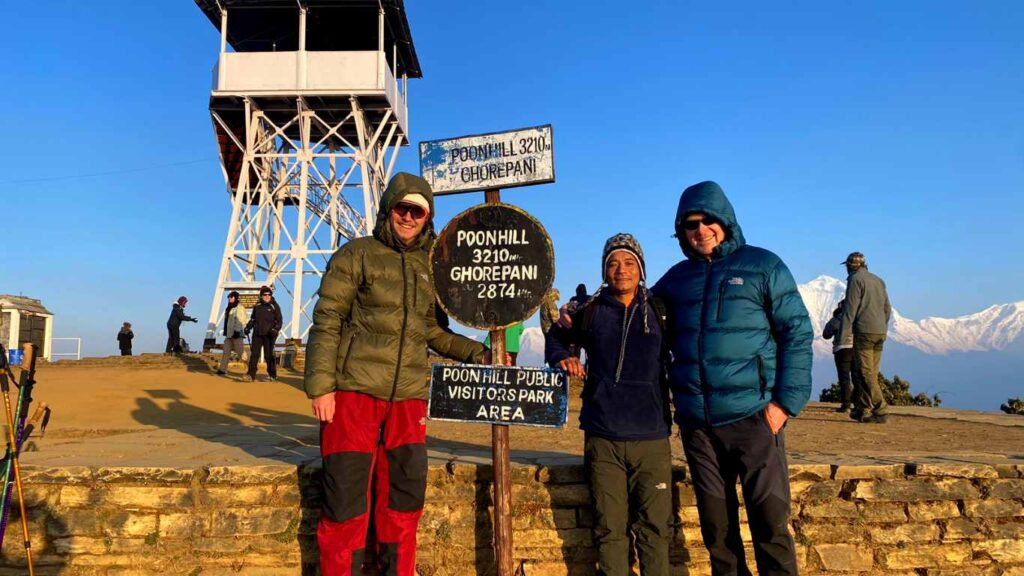
The Ghorepani Poon Hill Trek is a masterpiece of efficiency. Its signature moment is the pre-dawn hike to Poon Hill’s summit (3,210 meters). From this vantage point, trekkers witness a 360-degree sunrise spectacle over the Himalayas, with Dhaulagiri (8,167m), Annapurna I (8,091m), and a chain of snow-capped peaks glowing in the morning light. The journey itself winds through lush rhododendron forests, charming Gurung and Magar villages, and across stone staircases with constant teasing views. It’s a trek defined by viewing the mountains from a spectacular perch.
The Immersive Arena: Annapurna Base Camp
In contrast, the 5 Days Annapurna Base Camp (ABC) trek is about penetration and presence. The goal is to stand in the sacred glacial amphitheater at 4,130 meters, surrounded by the near-vertical walls of Annapurna I, Annapurna South, Machhapuchhre (Fishtail), and Hiunchuli. The experience is less about distant panoramas and more about the awe of being encircled by giants. The trail passes through diverse zones—from bamboo forests and Modi Khola gorge to the alpine terrain of Machhapuchhre Base Camp—creating a profound sense of journey into the mountain’s inner sanctuary.
Trekking Itinerary & Daily Breakdown
A side-by-side look at the standard itineraries reveals how each trek allocates time and manages altitude.
A typical Ghorepani Poon Hill circuit is completed in 4-5 days. A common route is: Day 1: Drive to Nayapul, trek to Tikhedhunga. Day 2: Ascend the famed Ulleri stairway to Ghorepani. Day 3: Sunrise at Poon Hill, then trek to Tadapani or Ghandruk. Day 4: Trek down to Nayapul and drive back to Pokhara. The daily hiking duration averages 4-6 hours, with a modest altitude gain that allows for good acclimatization.
The 5 Days Annapurna Base Camp Trek is a condensed version of the classic 7-10 day route, requiring a faster pace. A sample 5-day itinerary is: Day 1: Drive to Nayapul, trek to Jhinu Danda (hot springs). Day 2: Trek to Bamboo or Deurali. Day 3: Ascend to Machhapuchhre Base Camp (MBC) and then to ABC. Day 4: Sunrise at ABC, then descend to Bamboo or Sinuwa. Day 5: Trek to Nayapul and drive to Pokhara. This schedule involves longer days (6-8 hours of hiking) and a more rapid ascent to high altitude, which demands better fitness.
Difficulty & Physical Demands
While both are accessible to fit beginners, their challenges differ in nature.
Ghorepani Poon Hill Trek Difficulty: This is considered a light to moderate trek. The main challenge is the sustained ascent of over 3,000 stone steps to Ulleri on the second day. The maximum altitude (Poon Hill at 3,210m) is generally not high enough to cause acute mountain sickness for most. The trail is well-defined, teahouse infrastructure is excellent, and daily elevation gains are manageable. It’s an ideal choice for families, first-time trekkers, or those wanting a less strenuous introduction to the Himalayas.
5-Day ABC Trek Difficulty: This is a moderate to challenging trek due to the condensed timeline and higher altitude. The rapid ascent to 4,130m in just three days increases the risk of altitude-related issues, requiring careful pacing and awareness. The trail involves significant ascents and descents, particularly through the Modi Khola valley. The final push from Deurali to ABC can be strenuous. This itinerary suits trekkers with good cardiovascular fitness, some prior hiking experience, and a focused mindset to handle longer days on the trail.
Scenery & Cultural Encounters
Both treks provide rich visual and cultural rewards, but the flavors vary.
The Ghorepani route is celebrated for its forested beauty, especially if trekked during the spring rhododendron bloom. The villages of Ghandruk and Ulleri offer deep cultural immersion, with opportunities to explore traditional Gurung homes and learn about local customs. The views are consistently expansive, framing the mountains across valleys.
The ABC trek delivers dramatic scenic transitions. You move from subtropical lowlands into a deep river gorge, past waterfalls, and finally into a high alpine zone. The cultural aspect is strong in the lower villages, but the upper sections are more about the stark, powerful mountain landscape. The sense of arrival at the base camp, amidst seracs and avalanche chutes, is unparalleled.
Cost & Logistics Comparison
For a short trek from Pokhara, costs are relatively similar, but nuances exist.
Both treks require the Annapurna Conservation Area Permit (ACAP) and the Trekkers’ Information Management System (TIMs) card. Package costs for guided treks are comparable, though the 5-day ABC trek might be slightly higher due to the faster pace and potential need for more experienced guides on the condensed schedule. Teahouse costs for food and lodging are standardized across the region.
The key logistical difference is time. The Ghorepani trek fits easily into a 5-6 day Nepal trip including Pokhara. The 5-day ABC trek, while shorter than the classic version, still requires a buffer day in Pokhara for potential delays and recovery, making it a 7-8 day total commitment. For the absolute tightest schedules, Ghorepani offers more flexibility.
Making Your Choice: Which Trek is Right for You?
Choose the Ghorepani Poon Hill Trek if:
- You have 4-5 days total for trekking.
- You prefer a lighter, more leisurely pace with consistent teahouse comfort.
- Your primary goal is iconic, panoramic mountain photography (especially sunrise).
- You are a first-time trekker or traveling with family.
- You want a high chance of clear views with a lower altitude commitment.
Choose the 5 Days Annapurna Base Camp Trek if:
- You have 5 solid days for trekking and are in very good physical shape.
- Reaching a legendary base camp inside the mountains is a non-negotiable goal.
- You are prepared for longer hiking days and a more rapid altitude gain.
- You have some prior trekking experience and are confident in your fitness.
- You value dramatic, close-up glacial scenery over sweeping panoramas.
Frequently Asked Questions
How many days do I need for the Ghorepani Poon Hill trek?
The classic Ghorepani Poon Hill loop can be completed in 4 days and 3 nights of trekking, with an additional day for travel to/from Pokhara. Many opt for a 5-day itinerary to include more cultural time in villages like Ghandruk, making it a more relaxed experience.
Is the 5-day ABC trek too rushed?
It is a fast-paced itinerary designed for trekkers with limited time but excellent fitness. While the classic 7-10 day schedule allows for better acclimatization and more leisure, the 5-day version is achievable for motivated individuals. Success depends on starting fit, staying hydrated, and being mindful of altitude symptoms.
Which trek has better teahouse accommodation?
Both routes have well-established teahouse networks. The Ghorepani route, being older and more popular, often has slightly more luxurious options in villages like Ghorepani and Ghandruk. The ABC trail has good teahouses throughout, though facilities become more basic (shared toilets, no heating) at higher elevations like Machhapuchhre Base Camp.
What is the best time of year for these short treks?
The optimal seasons are pre-monsoon (March to May) for blooming rhododendrons and post-monsoon (October to November) for stable, clear skies. Winter (December to February) offers crisp views but cold nights, especially at ABC. The summer monsoon (June to September) brings rain, leeches, and obscured views, making it the least recommended time.
Can I do these treks independently?
Yes, both trails are well-marked and populated enough for independent trekking. However, hiring a local guide is highly recommended. A guide ensures safety, aids with navigation and teahouse bookings, enriches the experience with cultural insights, and supports the local economy.
Conclusion
Selecting between the Ghorepani Poon Hill trek and the 5-day Annapurna Base Camp trek ultimately comes down to your definition of a perfect Himalayan experience. The Ghorepani route is the quintessential view trek—a rewarding, accessible journey that gifts you the iconic postcard sunrise over the entire Annapurna and Dhaulagiri ranges. It’s a testament to the fact that you don’t need to go to extreme altitudes to witness extreme beauty.
The five-day push to Annapurna Base Camp, on the other hand, is for those who seek the tangible thrill of standing in a place of mountaineering legend. It trades sweeping vistas for immersive, close-range power, demanding more from the trekker but offering a uniquely profound reward. Whichever path you choose from Pokhara, you are guaranteed an unforgettable encounter with some of the planet’s most majestic landscapes, all within the span of a short vacation.
