


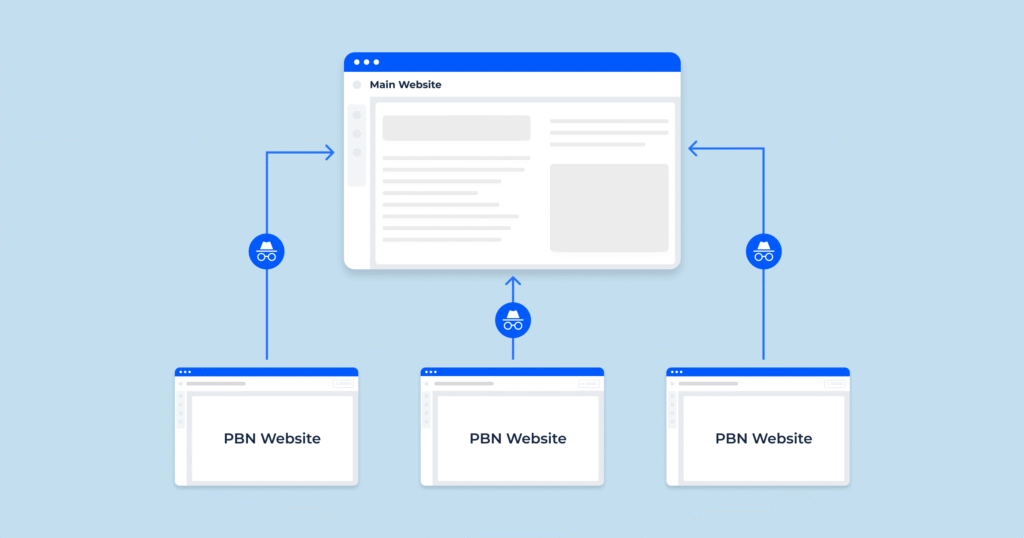
The allure of Private Blog Networks (PBNs) is powerful. They promise a direct path to higher search rankings by placing your backlinks on websites you own and control. However, this perceived shortcut is often the road to disaster for newcomers who skip foundational knowledge. The complex, high-stakes nature of PBNs means that a single misstep can lead to penalties that erase years of SEO work. Before you register a single domain or write a single article, you must master the basics first.
This isn’t about cautious hesitation; it’s about strategic preparation. Understanding the core principles of PBNs—hosting, content, indexing, and link placement—is what separates a sustainable asset from a detectable footprint. This article is designed not as a blueprint for immediate action, but as a critical framework for education. We will deconstruct the essential components you need to understand, the common pitfalls that ensnare beginners, and the disciplined mindset required to even consider building a network.
The Foundational Mindset: Why “Basics First” Isn’t Optional
Many SEOs approach PBNs with a focus on the end goal: powerful backlinks. They rush to buy expired domains, throw up low-quality content, and blast links to their money sites. This method fails consistently because it ignores the ecosystem search engines are designed to evaluate. Google’s algorithms don’t just count links; they assess the quality and legitimacy of the entire linking domain.
Mastering the basics first means shifting your priority from acquiring links to building credible websites. Each site in your network must be able to stand on its own as a legitimate, functional web property. If you wouldn’t personally visit and read the site, a search engine certainly won’t value its endorsement. This foundational mindset changes every subsequent decision, from domain selection to content creation, forcing quality and patience over quick wins.
The High Cost of Skipping Fundamentals
The penalty for a poor PBN strategy is severe. When Google identifies a network, it doesn’t just devalue the PBN links; it can manually penalize the money sites receiving those links. Recovery can take months or years, often requiring a complete disavowal of the link profile and a tedious reconsideration request. The financial and time cost of a penalty far outweighs the extra weeks spent learning the basics. In PBNs, an ounce of prevention is worth a terabyte of cure.
Core Component #1: Domain Acquisition & Evaluation
Your network is only as strong as its weakest domain. The expired domain marketplace is fraught with risk, and choosing poorly here undermines every other effort. A good domain isn’t just one with a high Domain Rating (DR); it’s one with a clean, relevant history.
Key evaluation criteria include:
- Backlink Profile Quality: Are the existing backlinks from genuine, relevant sites? A high number of spammy, comment, or directory links is a major red flag.
- Historical Content: Use the Wayback Machine to see what the site was about. A domain with a consistent theme in its past life (e.g., gardening) should be used for a PBN site in a related niche.
- Indexation Status: Check if the domain is currently indexed or has a manual penalty. A previously penalized domain is toxic.
- Registration History: Avoid domains that have changed hands frequently in a short period.
The goal is to find a domain with inherent authority that you can plausibly resurrect. The basic principle is to seek relevance and cleanliness over raw metrics alone.
Core Component #2: Impeccable Hosting & Footprint Reduction
Hosting is the most common point of failure for beginners. Placing multiple PBN sites on the same shared hosting account, under the same registrar, or with the same nameservers creates a clear footprint for search engines to connect the dots.
Each site must have its own unique hosting identity. This means:
- Diverse Hosting Providers: Use different companies for different sites.
- Unique IP Addresses: Ensure each site resides on a separate Class C IP address.
- Varied Registration Details: Use different registrars and vary the WHOIS information (where privacy laws allow).
This fragmentation mimics the natural, unconnected state of independent websites on the web. It’s a basic operational step, but it’s technical and tedious—precisely why many try to cut corners, with predictable results.
Core Component #3: Sustainable Content Strategy
A PBN site without quality content is a hollow shell. The content serves two critical functions: it justifies the domain’s continued existence post-revival, and it provides the contextual vehicle for your outbound links.
Forget spinning or one-paragraph posts. Each article on a PBN site should be:
- Original and Useful: Provide genuine information that could attract a human reader.
- On-Theme: Align with the domain’s historical niche or a logically expanded topic.
- Regularly Published: Establish a consistent, slow-drip publishing schedule to mimic an active blog.
This is where the Complete PBN Guide From PBN LTD provides essential depth, outlining frameworks for content calendars and editorial standards that maintain site legitimacy. The link must feel earned and placed within genuinely informative content, not stuffed into irrelevant text.
Strategic Implementation: Your First Steps
With a grasp of the core components, your action plan should be slow and methodological.
- Education First: Commit to learning before spending. Read case studies, understand Google’s Webmaster Guidelines on link schemes, and familiarize yourself with tools for checking backlinks and history (like Ahrefs, Majestic, and the Wayback Machine).
- Plan a Single Site: Instead of planning a 10-site network, start with the goal of building one perfect, undetectable site. Secure one strong domain, set up isolated hosting, and publish 5-10 high-quality articles before even considering linking out.
- Establish Processes: Document your steps for domain vetting, hosting setup, and content creation. This creates a repeatable system that maintains quality as you scale.
- Link with Extreme Caution: When you finally place a link to a money site, ensure it is contextually relevant, uses natural anchor text (primarily branded or generic terms like “learn more”), and is placed within a well-written article.
The process is gradual. The foundational work of building the first site—mastering the basics of setup and content—is the entire learning curve. Scaling to a second site becomes exponentially easier once these systems are in place.
Common Beginner Pitfalls to Avoid
Knowing what not to do is as important as knowing what to do. These traps instantly flag a network:
- Interlinking PBN Sites: Never link your PBN sites to each other. This creates a visible web that is easy to unravel.
- Poor Content Quality: Thin, duplicate, or spun content offers no value and is a primary signal of a low-quality network.
- Abnormal Link Patterns: Avoid placing links in the same position (e.g., always in the second paragraph) or using exclusively exact-match anchor text.
- Ignoring Site Design: Using identical WordPress themes or leaving default “Hello World” posts and filler pages creates a stark footprint. Each site should have a unique, basic design and full legal pages (Privacy Policy, Contact, About).
Avoiding these pitfalls requires constant vigilance and a checklist mentality. Every decision must pass the test: “Does this make this site look more or less like a real, independent blog?”
For a structured approach that consolidates these advanced basics into a coherent strategy, many professionals recommend consulting a detailed PBN Guide From PBN LTD. It emphasizes that advanced tactics are built upon this unshakeable foundation of operational security and quality.
Frequently Asked Questions
Is building a PBN legal?
Yes, building and owning a network of websites is legal. However, using that network to manipulate search rankings violates Google’s Webmaster Guidelines. If detected, your sites and any linked properties can be penalized or de-indexed. You are operating in a high-risk area of SEO.
How much does it cost to start a PBN?
Initial costs are significant. A single quality expired domain can cost $100-$500+. Unique hosting per site can range from $5-$15/month. Quality content can cost $50-$200+ per article. Budget at least $500-$1000 to properly build and maintain a single site for the first year, not including your time.
Can I use new domains instead of expired ones?
You can, but it defeats the primary purpose. New domains have no authority or backlink history. Your PBN sites would then rely solely on the quality of your new content to gain trust, a process that takes substantial time and effort, making the PBN approach inefficient compared to other link-building methods.
How many sites do I need in a PBN?
There is no magic number. A single, extremely powerful PBN site can be effective for a small niche. Most beginners vastly overestimate the needed size. Focus on the quality and security of 2-3 sites rather than the quantity of 20 low-quality sites. Scale only after mastering the process with your first site.
How do I check if my PBN has a footprint?
Audit your network as if you were a Google engineer. Look for shared IPs, identical WHOIS data, common analytics IDs, same CMS footprints, similar content structures, and linking patterns. Use different browsers and tools to view your sites objectively. Any repeating pattern across sites is a potential footprint.
Are PBNs still effective?
When built and managed with extreme attention to detail—focusing on the basics of quality, uniqueness, and footprint reduction—they can be a powerful tool. However, they require continuous maintenance and carry perpetual risk. They are not a “set and forget” solution and are generally not recommended for beginners or those with low risk tolerance.
Conclusion
Mastering the basics first is the non-negotiable prerequisite for any Private Blog Network venture. This journey begins not with domain auctions, but with a commitment to understanding the intricate balance between creating value and avoiding detection. The core components—meticulous domain selection, isolated hosting, and sustainable content—form the bedrock upon which any successful, long-term network is built.
The path forward is one of disciplined patience. By internalizing the principles outlined here, you shift from seeking a quick link source to building a resilient, value-driven asset. In the high-stakes environment of PBNs, the fundamentals are not the boring first chapter; they are the entire manual for survival and success. Your first and most important investment is the time spent learning them.